




- Alas
- March 27, 2026
- 0 Comments
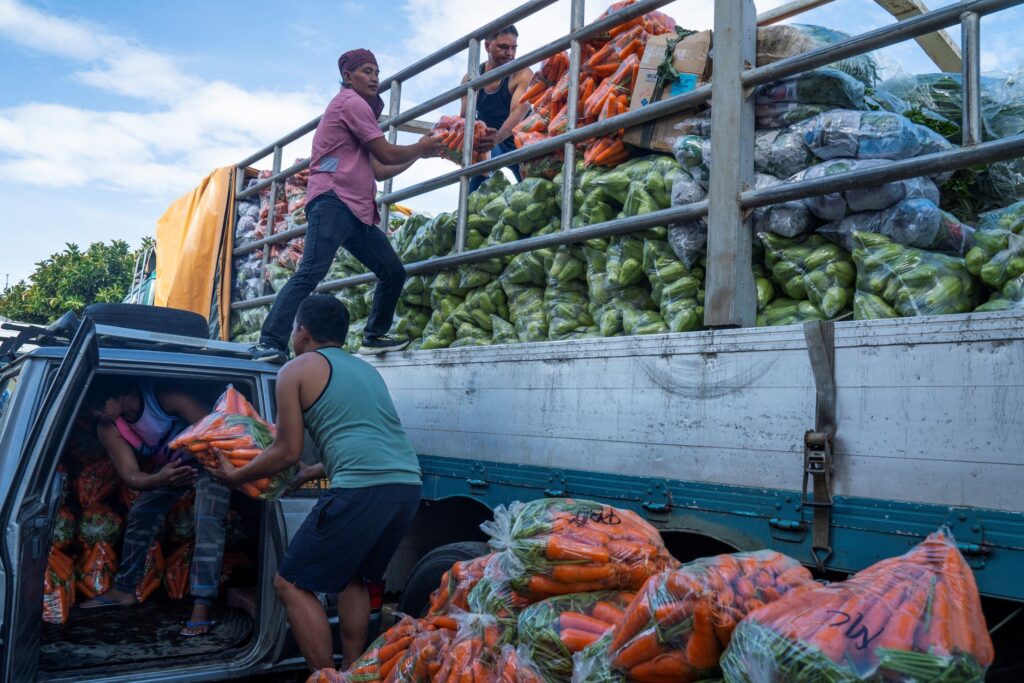
In many regions of the world, food shortages do not begin in the field, but after the harvest.
Fruits and vegetables that have been painstakingly grown fail to reach those who need them. They are lost along the way. They spoil before being consumed. And in contexts where access to food is limited, this loss ceases to be merely a logistical problem and becomes a human one.
This scenario is especially visible in countries like India and the Philippines, where large volumes of agricultural production face structural challenges for their conservation and distribution.
The fragility of food without a cold chain
The cold chain has historically been one of the main tools for preserving fresh produce. However, in many countries, this infrastructure is nonexistent or insufficient.
In India and the Philippines, a significant portion of agricultural production must withstand complex conditions:
- High temperatures for much of the year
- Long journeys from rural areas to urban centers
- Storage under uncontrolled conditions
In this scenario, even a perfectly good piece of fruit can spoil in a matter of days. The result is a significant loss of food that is never consumed.
A solution based on precision, not infrastructure.
Faced with this reality, solutions have begun to emerge that do not depend exclusively on large investments in infrastructure, but on something more accessible: improving the way food is treated after harvest.
It is at this point that the technology developed in Chile begins to play a relevant role.
Companies like Ingeagro have brought their solutions to markets such as India and the Philippines, where the need to optimize post-harvest handling is urgent. Through precise and controlled application systems, it is possible to intervene directly on the fruit, improving its shelf life without depending on ideal conditions.
Extending the lifespan changes everything.
One of the most relevant impacts of these technologies is the possibility of extending the shelf life of fruits and vegetables by several days, depending on the type of product and the environmental conditions.
Although it may seem like a minor improvement, in these contexts it represents a significant change.
Gaining up to three additional days allows you to:
- To get food to more distant markets
- That better withstand transport without refrigeration
- That they can remain available for a longer time before being consumed
In practical terms, it means that food that was previously wasted can now be used.
More than efficiency: access
Reducing post-harvest losses not only improves the efficiency of the agricultural system, but also has a direct impact on food availability.
In countries like India and the Philippines, where distribution is as critical as production, every additional day of shelf life opens up new possibilities:
- Reaching more remote areas
- Keep products available for longer in local markets
- Reduce pressure on the supply chain
Each piece of fruit that manages to stay in suitable conditions is one more opportunity for consumption.
Technology that crosses borders
What a few years ago was a solution applied mainly in export processes, is now being used in markets where the challenge is much deeper.
The technology developed in Chile is crossing borders and adapting to different production realities, demonstrating that it is possible to generate impact even in complex conditions.
Exporting these solutions not only represents a business opportunity, but also a concrete way to contribute to more efficient and resilient food systems.
A different perspective on post-harvest
For years, agricultural innovation has focused on producing more. However, in many contexts, the challenge is not to increase production, but to prevent what has already been produced from being lost.
Improving post-harvest handling, extending shelf life, and optimizing food management opens a new dimension in how we address the problem of food waste.
And along that path, technologies developed in Chile —now present in countries like India and the Philippines— are demonstrating that small improvements can generate big changes.
Sometimes, the difference isn't in how much is produced,
but rather how far it manages to go.
And on that journey, every day counts.

 Created by Agencia Alas